Its more like a historical-photo-blog.
I love visiting new places and my recent destination was Mahabalipuram.
Mahabalipuram, also known as Mamallapuram is a town in Kancheepuram district in the Indian state of Tamil Nadu. It is around 60 km south from the city of Chennai.
The journey to that place was a little tedious because of the strong and stubborn sun. We had to catch a bus to Kelambakkam and then to Mahabalipuram. It took almost an hour to reach that place.
That small town is a hub of ancient monuments. The group of monuments at Mahabalipuram hav been classified as a UNESCO World Heritage Site. We visited the Shore temple, The Five Rathas or Panch Rathas, the light house, Olakaneeswara Temple and the shell museum. We had only a day to visit so couldn’t cover most of the land.
This place is a mammoth zone for ancient Indian history. The beach that wraps around the area enhances the stupendous view of the region.
A deeper insight to the places I visited:
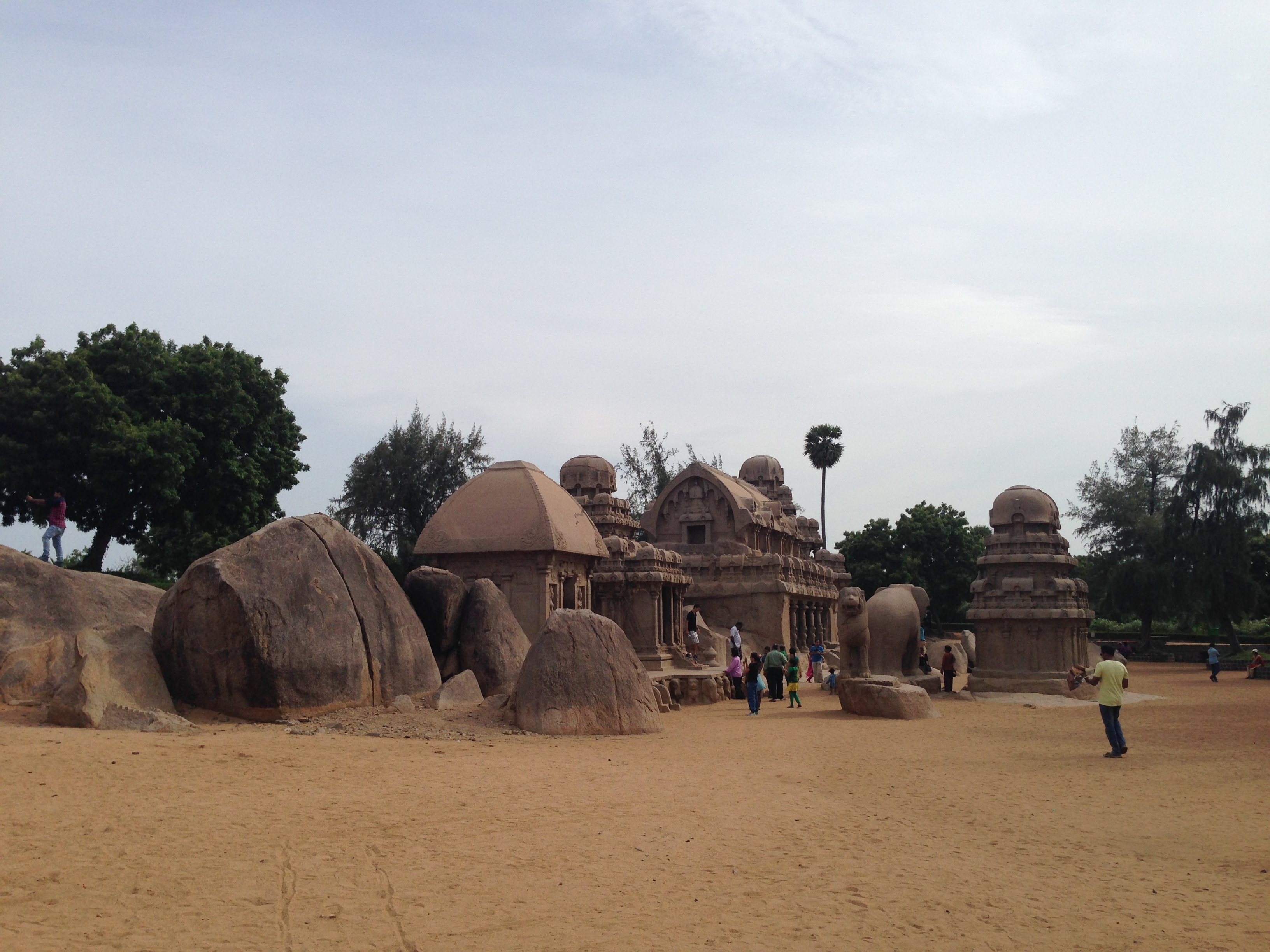
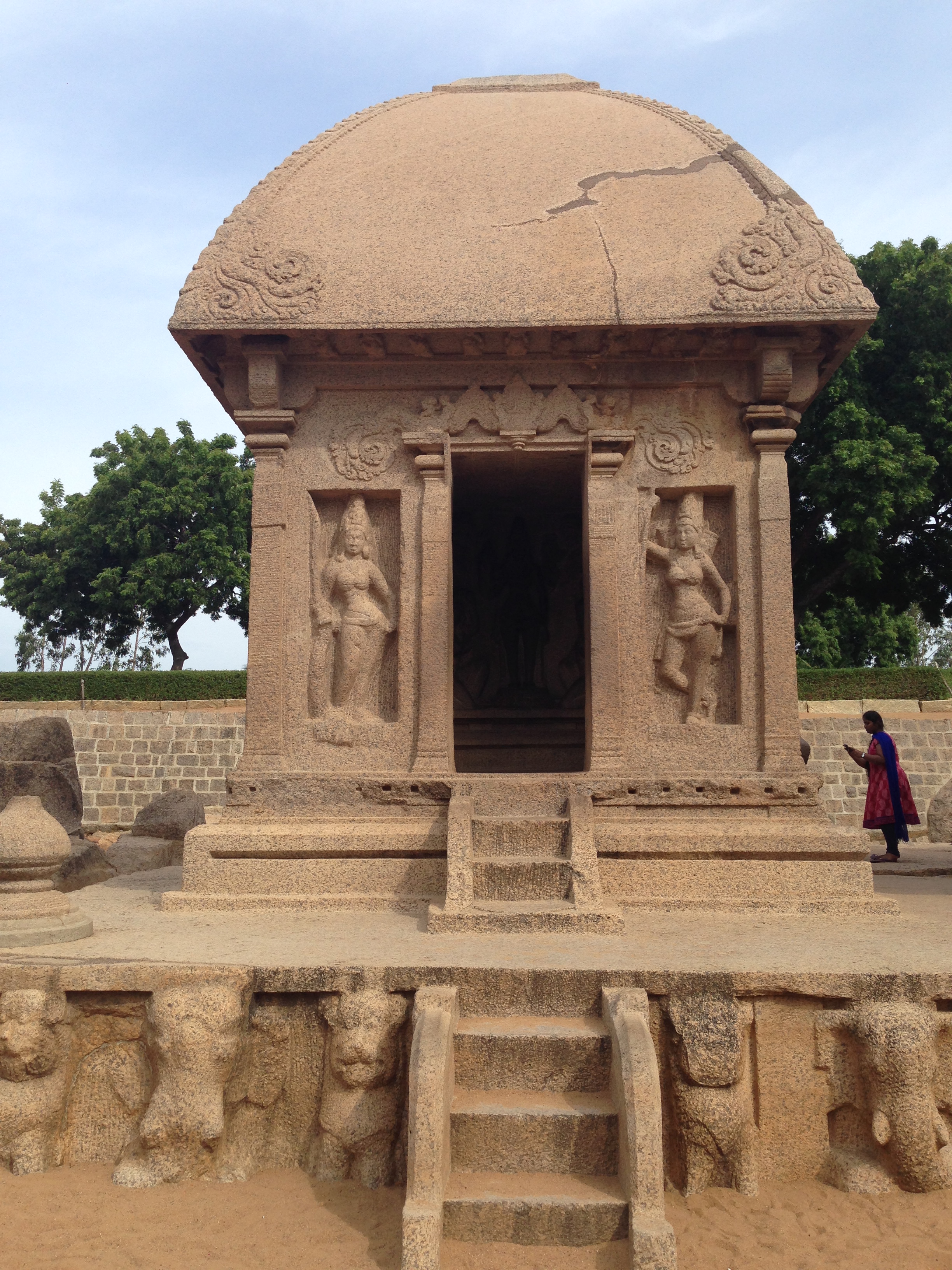
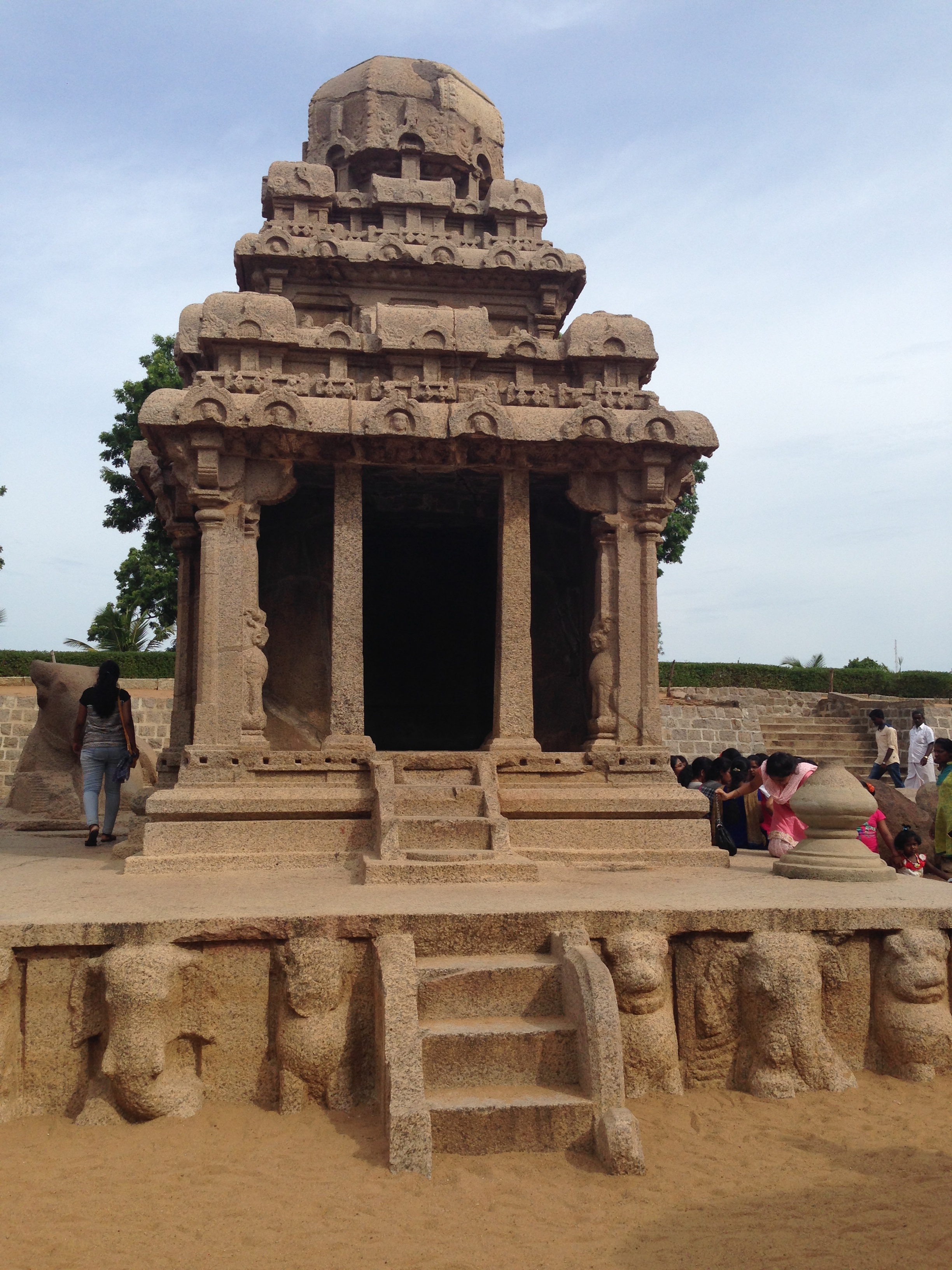
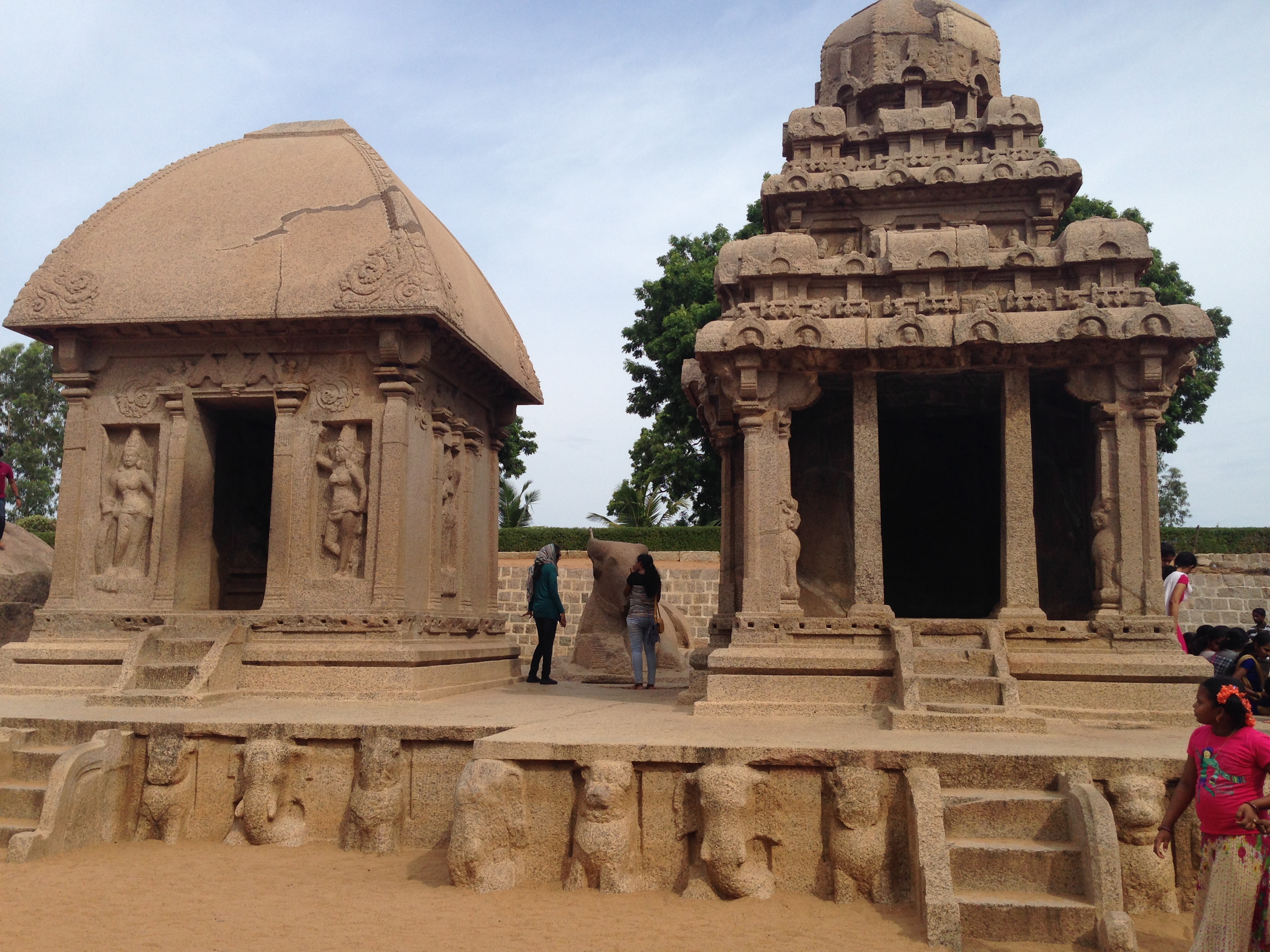
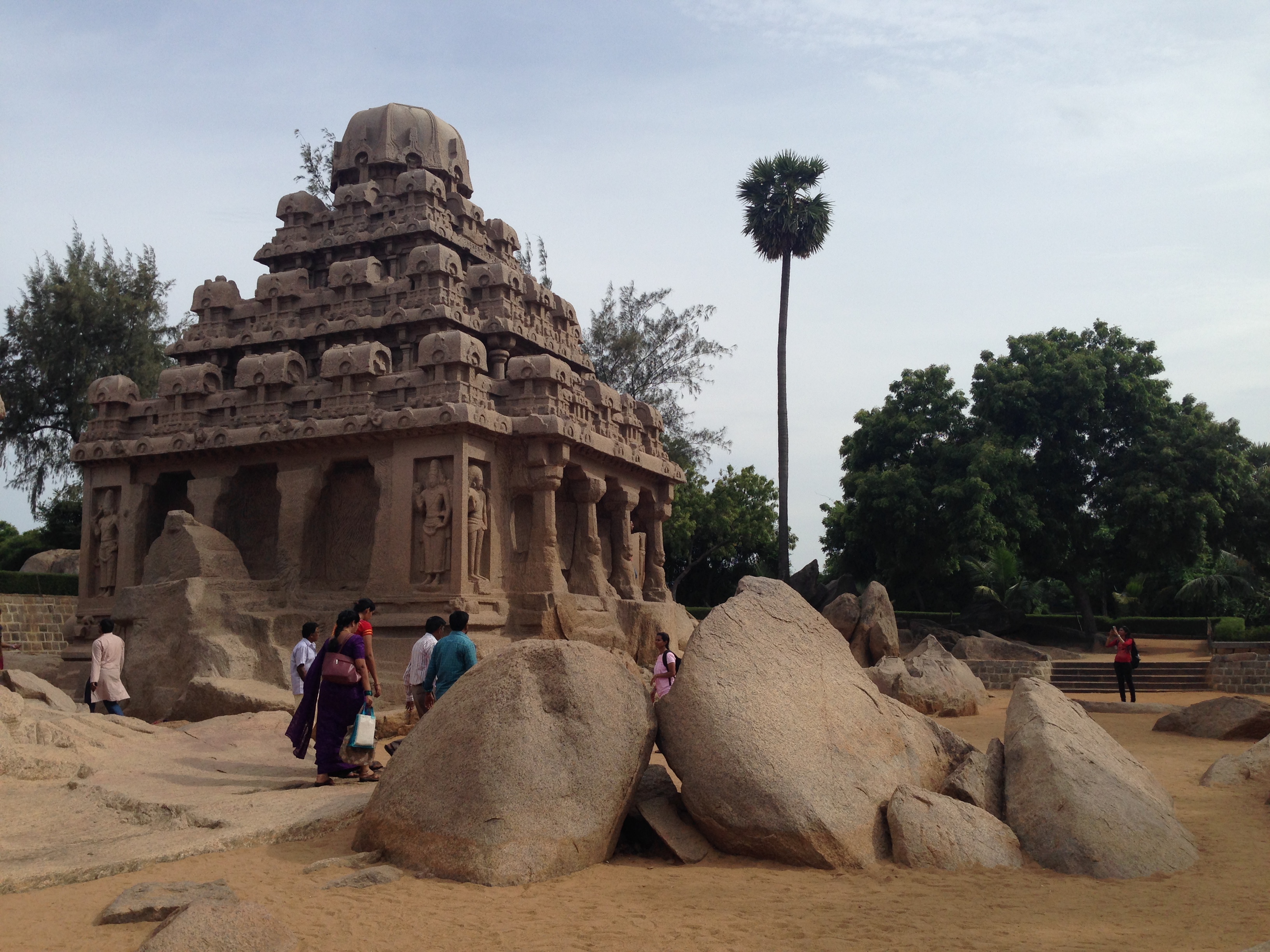
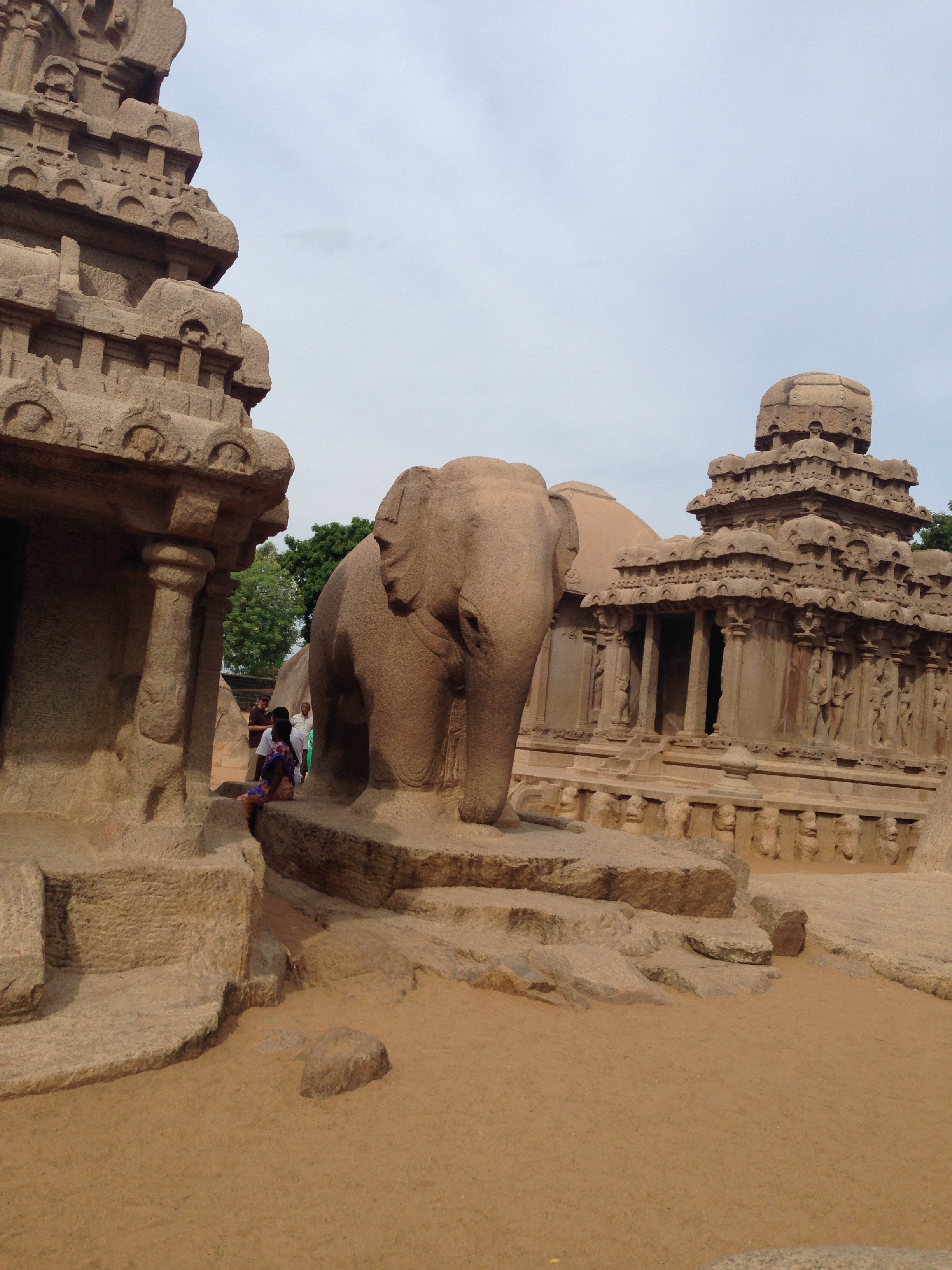
• Pancha Rathas (Five Chariots) – five monolithic pyramidal structures named after the Pandavas (Arjuna, Bhima,Yudhishtra, Nakula and Sahadeva) and Draupadi. An interesting aspect of the rathas is that, despite their sizes they are not assembled – each of these is carved from one single large piece of stone.
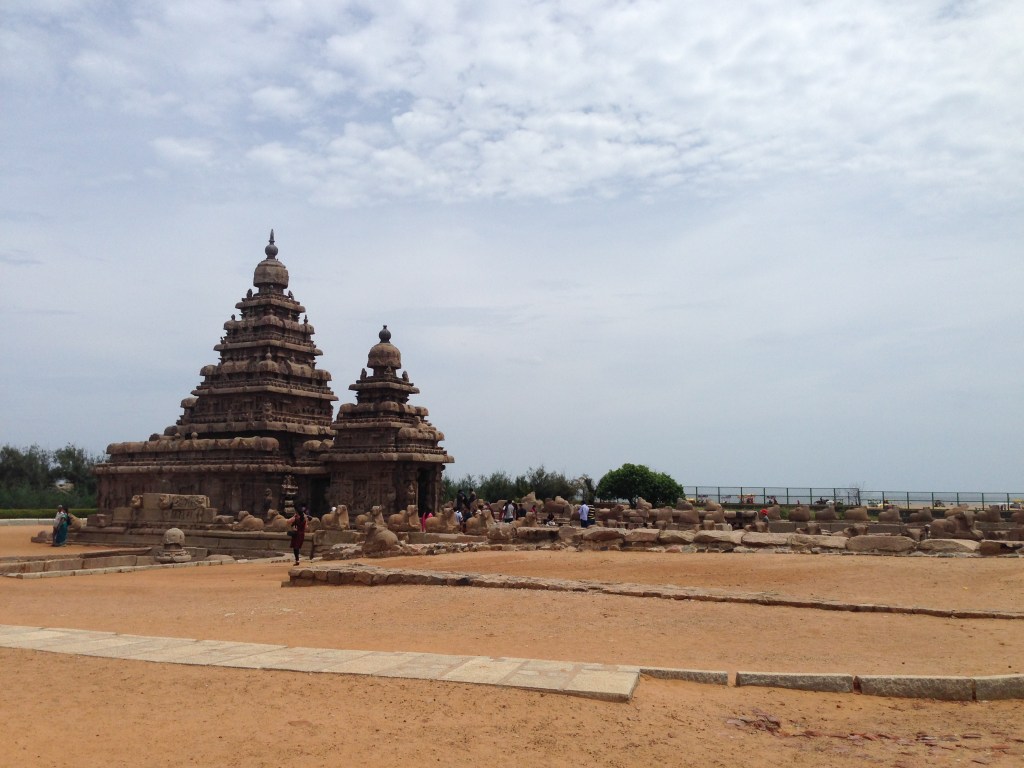
• The Shore Temple – a structural temple along the Bay of Bengal with the entrance from the western side away from the sea. Recent excavations have revealed new structures here.
• Olakaneeswara Temple and the modern light house – India’s oldest lighthouse (Olakaneeswara Temple), built around 640 AD by Pallava king Mahendra Pallava stands next to this modern structure.
History:
Shore Temple: The Shore Temple (built in 700–728 AD) is so named because it overlooks the shore of the Bay of Bengal. It is a structural temple, built with blocks of granite, dating from the 8th century AD. Sailors gave the name Seven Pagodas to the Shore Temple when they saw this tall structure on the seashore, as the temple probably acted as a landmark for navigation of their ships. As it appears like a Pagoda, the name became familiar to the seafarers. As the temple foundation is on hard granite rock, it could sustain the waves created by the Tsunami (26 December 2004); the groynes erected around the temple area on the coastline also aided its protection.

Pancha Rathas: The Pancha Rathas were carved during the reign of King Mahendravarman I and his son Narasimhavarman I. Work on these five rathas was discontinued following the death of Narasimha Varman in 668 AD. The purpose of their construction is not known as the structures were not completed.
There is an interesting mythological story about this place. Prince Hiranyakasipu refused to worship the god Vishnu. The prince’s son, Prahlada, loved and was devoted to Vishnu greatly and criticized his father’s lack of faith. Hiranyakasipu banished Prahlada but then relented and allowed him to come home. Father and son quickly began to argue about Vishnu’s nature. When Prahlada stated that Vishnu was present everywhere, including in the walls of their home, his father kicked a pillar. Vishnu emerged from the pillar in the form of a man with a lion’s head, and killed Hiranyakasipu. Prahlada eventually became the king, and had a son named Bali. Bali founded Mahabalipuram on this site.
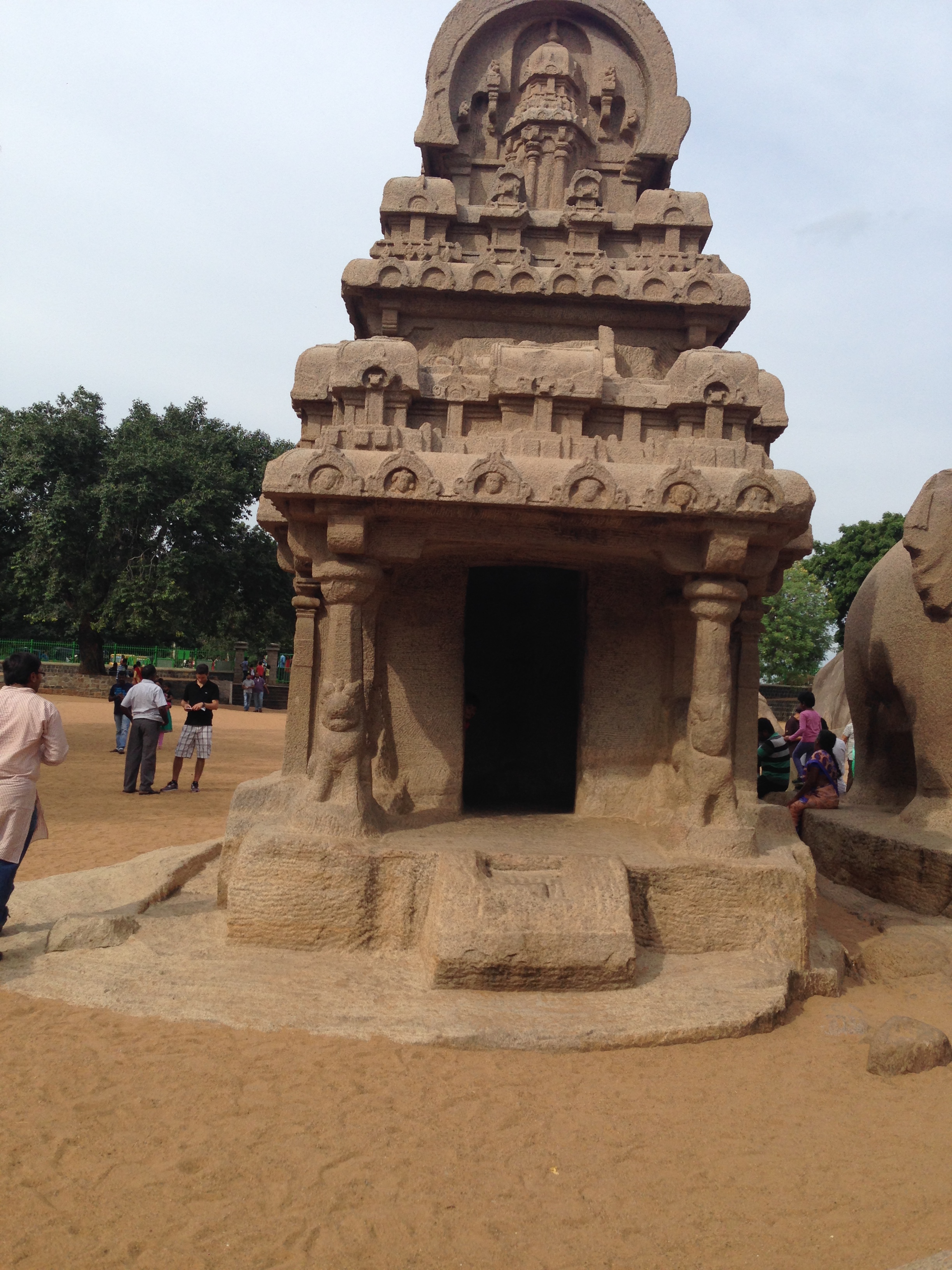
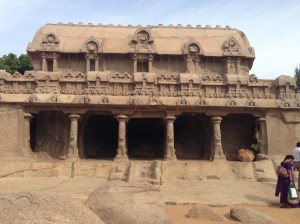
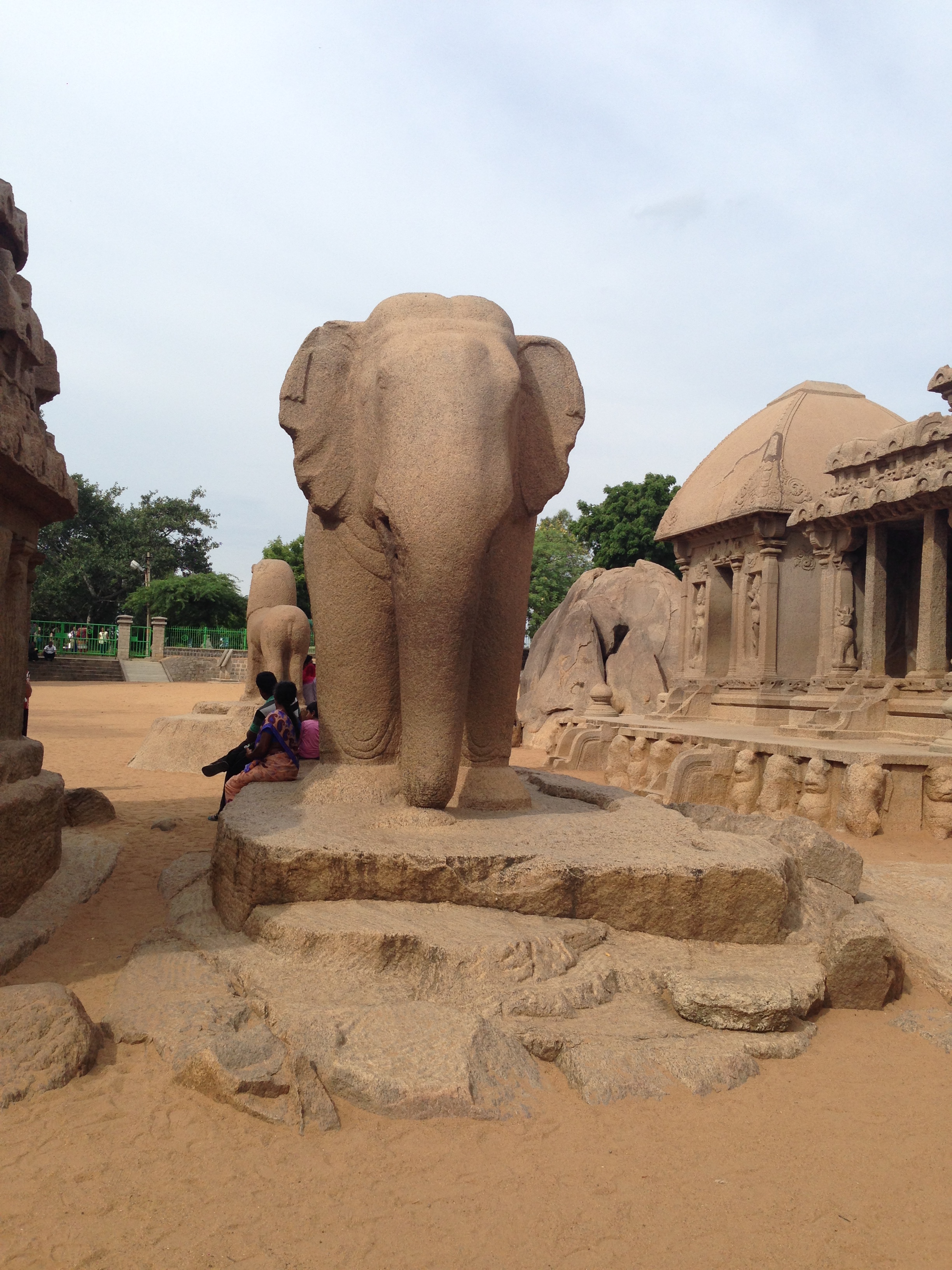
Legend has it that Gods were jealous of the architectural elegance of the monuments of Mahablipuram, and as a result they caused floods to occur, which submerged most parts of the city, except for a few structures that are seen now.
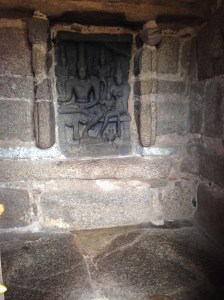

Olakaneeswara Temple: This temple was dedicated to lord Siva. By the end of eighteenth century or in the beginning of nineteenth century, the sivalinga was possibly removed by some vandals. A granite roof was constructed atop the temple to keep the light from 1887 to 1900.

We also visited Shell Museum. We browsed around for an hour. It would be an exciting place for those who are interested in Conchology. But I wasn’t an enthusiast. I enjoyed browsing through the specimens. What I liked the most was the Pearl-formation stages. It was beautiful.
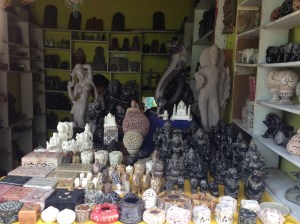
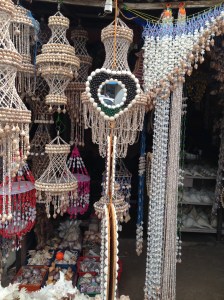
What I also loved were the cute street shops that sold handmade sculptures. Some were made of stones, some of clay. There were also some pretty shell show-cases. I loved them.


The mythical stories and the historic relevance of the ancient marvelous monuments always fascinated me. I always knew there is a whole chunk of Indian history that I still need to know and I am glad that I got a chance to visit this amazing place which helped me reconnect with our History.
Stay connected.
Stay Awesome.
References: https://en.wikipedia.org/wiki/Mahabalipuram_lighthouse
https://en.wikipedia.org/wiki/Shore_Temple
https://en.wikipedia.org/wiki/Mahabalipuram
https://en.wikipedia.org/wiki/Pancha_Rathas
 She.GetsReal
Leave a comment